Managing personal finances, developing consistent saving habits, and working toward long-term financial goals are important parts of building a more secure future. However, staying motivated can sometimes be difficult, especially when financial targets seem far away or monthly expenses make saving feel challenging.
In the digital age, visual discovery platforms such as Pinterest provide an interesting way to explore money-saving ideas, budgeting inspiration, and personal finance organization methods. Instead of relying only on traditional financial advice, people can discover visual savings trackers, budget templates, money challenges, and motivational graphics that make financial planning easier to understand.
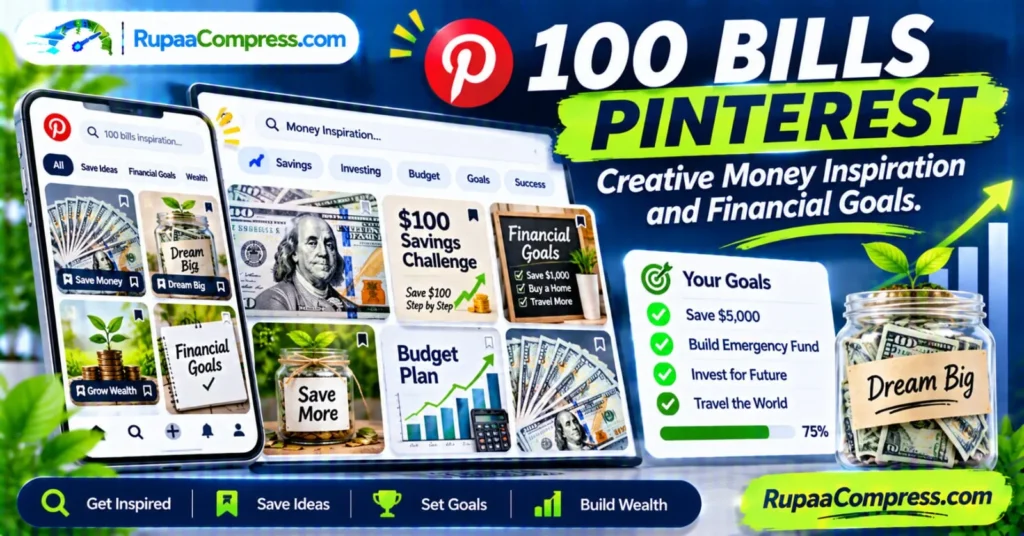
One popular search phrase is 100 bills Pinterest. People searching for this term may be looking for images of $100 bills, money-themed inspiration boards, savings challenge ideas, or creative ways to visualize financial goals.
These ideas can provide inspiration for developing better money habits. For example, a visual savings tracker can help you monitor progress toward a specific target, while a monthly budget template can help you understand where your income goes.
By exploring creative money inspiration and financial goals, you can discover different ways to organize your financial plans. You can also explore a $100 savings challenge and budget plan, create an emergency fund target, and learn about long-term financial planning.
In this guide, we will explore how to find and organize financial inspiration on Pinterest, understand savings challenges, create practical budget plans, and develop habits that support your financial future. We will also explain how to prepare and optimize financial graphics for online publishing using free browser-based tools such as RupaCompress.
Why Visual Financial Inspiration Works So Well
Personal finance can sometimes feel complicated. People may have several financial responsibilities, including household expenses, bills, debt payments, savings targets, and future investments.
When everything is managed through numbers and spreadsheets, it can become difficult to stay motivated. Visual financial planning offers another way to organize these responsibilities.
Here are several reasons why visual financial inspiration can be useful.
1. It Makes Financial Goals Easier to Understand
A financial goal becomes easier to follow when it is presented visually.
For example, imagine that your goal is to save $1,000. Instead of simply writing the amount in a notebook, you could create a savings tracker divided into smaller milestones.
Each time you save money, you can mark another section as complete. This creates a visual record of your progress and helps you see how close you are to your target.
2. It Encourages Consistent Saving Habits
Small saving activities can help develop long-term financial discipline.
A savings challenge can divide a larger target into smaller contributions. For example, you could save a fixed amount every week or set aside different amounts depending on your available income.
The important idea is to build a realistic habit rather than trying to save more than you can afford.
3. It Helps Organize Financial Ideas
Pinterest contains a wide variety of visual content, including:
- Monthly budget planners
- Weekly savings trackers
- Emergency fund challenges
- Debt repayment charts
- Financial goal worksheets
- Money-saving tips
- Investment education graphics
- Printable expense trackers
Saving useful Pins to organized boards can make it easier to revisit ideas when planning your finances.
4. It Can Help Maintain Motivation
Long-term financial goals often require patience. A visual progress tracker can remind you why you started saving and help you recognize smaller achievements along the way.
For example, someone saving for a new laptop, a holiday, education, or a home deposit may find it motivating to track each milestone.
Visual inspiration does not replace financial planning, but it can make the process more engaging.
Core Pillars of Personal Finance Inspiration
Creating a useful financial roadmap requires more than collecting pictures of money. It involves organizing ideas into practical categories and turning inspiration into achievable actions.
Four important areas can help structure your financial journey.
Get Inspired
Start by exploring creative money ideas, savings jars, financial planning templates, and motivational graphics.
You can search Pinterest for phrases such as:
- Money-saving inspiration
- Financial freedom goals
- Minimalist budget ideas
- Savings challenge inspiration
- Personal finance motivation
Use these ideas as inspiration for developing habits that match your own financial situation.
Save Ideas
Create Pinterest boards to organize useful financial content.
For example, you could create separate boards for:
- Budget Planning
- $100 Savings Challenge
- Emergency Fund Goals
- Debt-Free Journey
- Future Investments
- Financial Motivation
Keeping related Pins together makes it easier to find useful ideas later.
Remember that saving an image on Pinterest does not automatically give you permission to reuse it on your own website or commercial projects. Always check the original source and usage rights before republishing someone else’s content.
Set Goals
Financial goals should be specific and realistic.
Instead of setting a general goal such as “save more money,” choose a measurable target.
Ko nga tauira ko:
- Save $100 over a selected period.
- Build an emergency fund.
- Reduce unnecessary monthly expenses.
- Pay off a specific debt.
- Save for education or professional development.
- Build a fund for a future purchase.
A clear target makes it easier to create a savings plan and measure progress.
Build Wealth
Building wealth is generally a long-term process. It may involve developing consistent savings habits, managing debt, maintaining an emergency fund, and learning about suitable investment options.
Useful financial habits include:
- Spending less than you earn when possible.
- Reviewing monthly expenses.
- Avoiding unnecessary high-interest debt.
- Building an emergency savings reserve.
- Learning about investment risks and potential returns.
- Planning for long-term financial responsibilities.
Investment decisions should be based on your individual circumstances, financial goals, and risk tolerance. Pinterest graphics and social media posts should not be treated as personalized financial advice.
Understanding the $100 Savings Challenge
Ko te $100 savings challenge is a simple way to practise saving money toward a small financial target.
Different versions of this challenge exist. Some encourage people to save a total of $100, while others use a $100 bill or larger savings milestones as visual motivation.
The exact method is flexible. You can choose a schedule and contribution amount that fits your income and expenses.
Example: Save $100 in 10 Weeks
One simple approach is to save $10 every week for ten weeks.
| Week | Weekly Savings | Total Saved |
|---|---|---|
| Week 1 | $10 | $10 |
| Week 2 | $10 | $20 |
| Week 3 | $10 | $30 |
| Week 4 | $10 | $40 |
| Week 5 | $10 | $50 |
| Week 6 | $10 | $60 |
| Week 7 | $10 | $70 |
| Week 8 | $10 | $80 |
| Week 9 | $10 | $90 |
| Week 10 | $10 | $100 |
This is only an example. You can adjust the amount and duration according to your circumstances.
Other Savings Challenge Ideas
1. Daily Savings Challenge
Set aside a small amount each day. Even modest contributions can add up over time.
2. Weekly Savings Challenge
Choose a fixed weekly amount and transfer it into a separate savings account or savings container.
3. No-Spend Challenge
Choose a specific period during which you avoid unnecessary purchases. Continue paying essential expenses and planned obligations.
4. Spare Change Challenge
Save leftover coins or small amounts after everyday purchases. Review the total regularly.
5. Goal-Based Savings Challenge
Choose a specific purpose, such as a new phone, laptop, holiday, or emergency fund. Divide the required amount into manageable milestones.
The best challenge is one that you can maintain without affecting essential expenses or creating additional financial pressure.
How to Create a Practical Budget Plan
A budget plan helps you understand how money enters and leaves your personal finances.
You do not need complicated software to begin. A notebook, spreadsheet, or simple budgeting template can be enough.
Step 1: Calculate Your Income
Start by identifying your regular income.
This may include:
- Monthly salary
- Freelance earnings
- Business income
- Part-time work
- Other regular sources
Use realistic figures rather than assuming that uncertain income will always be available.
Step 2: List Your Monthly Expenses
Write down your essential and optional expenses.
Essential expenses may include rent, food, transport, electricity, water, and necessary bills.
Optional expenses may include entertainment, subscriptions, dining out, and non-essential shopping.
Understanding these categories helps you identify areas where you may be able to adjust spending.
Step 3: Set a Savings Target
Choose an amount that is realistic after accounting for essential expenses and financial responsibilities.
You can start with a small amount and gradually increase it when your budget allows.
Consistency is often more useful than setting an unrealistic target that you cannot maintain.
Step 4: Track Your Progress
Use a budget tracker or savings checklist to record your progress.
Review your spending weekly or monthly. If your expenses change, adjust your plan rather than abandoning it.
Step 5: Review Your Budget Regularly
Your financial situation may change because of new responsibilities, income changes, or unexpected expenses.
Reviewing your budget every month or quarter can help keep your goals relevant.
Building an Emergency Fund for the Future
An emergency fund is money reserved for unexpected expenses.
Examples may include:
- Medical or dental expenses
- Unexpected home repairs
- Vehicle repairs
- Temporary loss of income
- Essential emergency travel
- Other urgent financial responsibilities
Without an emergency fund, an unexpected expense may force you to rely on borrowing or use money intended for other goals.
How to Start an Emergency Fund
Start with a manageable target. You do not need to save a large amount immediately. Choose a first milestone that is realistic for your income.
Keep the money separate. Where possible, use a separate savings account or another suitable place so that emergency savings are not mixed with everyday spending money.
Contribute regularly. Set aside an amount whenever your income arrives, provided essential expenses are covered.
Avoid unnecessary withdrawals. Use the fund for genuine emergencies rather than routine shopping or entertainment.
Increase the target over time. As your savings grow, review whether the amount is appropriate for your living expenses and responsibilities.
An emergency fund should be accessible when needed. Consider the safety, accessibility, and terms of any account you use.
Te Morea Matatapu o nga Utauta Arotautanga Kapua Kare i Manatokohia
Personal finance creators, bloggers, and website owners often download budget graphics, savings trackers, financial templates, and money-themed images for their content.
Some of these files may contain private information, business details, or personal financial records.
Uploading sensitive documents to an unfamiliar online service without reviewing its privacy practices can create unnecessary risks.
For example, a spreadsheet containing income details, account information, or personal expenses should not be treated like an ordinary public image.
Before using an online editing or optimization service, consider:
- What information is included in the file?
- Does the service upload files to a remote server?
- Kei te whakamarama tana kaupapa here tūmataiti me pehea te whakahaere i nga konae?
- How long are uploaded files retained?
- Is the service suitable for confidential documents?
- Can you remove personal details before processing?
Avoid uploading bank statements, account credentials, payment details, or confidential financial records to ordinary image-compression websites.
For public blog graphics and non-sensitive images, a browser-based image tool may provide a convenient way to prepare files without using a separate desktop application.
Te Otinga Haumaru: Arotautanga Atahanga I runga i te Tirotiro-a-Rohe
When preparing financial graphics for a blog or website, local browser-based image processing can be a useful option.
Some web tools use JavaScript and browser technologies such as the HTML5 Canvas API to process images on the user’s device rather than sending the original image to a remote processing server.
RupaCompress presents its image tools as browser-based utilities that process images locally. You can visit RupaCompress to explore its available image-processing features.
Depending on the tool and file type, browser-based processing can help with:
- Compressing images
- Resizing graphics
- Cropping images
- Converting image formats
- Adding watermarks
- Rotating and flipping images
- Applying photo effects
Why Local Image Processing Can Be Useful
Kua whakahekehia te tuku kōnae: When an image is processed locally as described by the service, the original image does not need to be sent to a remote image-processing server.
Convenient workflow: You can make basic image adjustments directly in your browser.
Faster preparation: For supported files and devices, local processing can reduce the need to wait for a remote upload and processing queue.
Useful for website publishing: Smaller, properly formatted images can help improve page-loading performance when published on a website.
However, local image processing should not be confused with complete website privacy. It does not automatically protect information shared through other website features, browser extensions, analytics, or external services. Always review the website’s privacy information and avoid processing highly confidential documents with tools that are not designed for them.
Also, image-compression tools are intended for image files. They should not be used as a substitute for secure financial-document or spreadsheet software.
Step-by-Step Guide: How to Curate and Manage Financial Goals
You can combine Pinterest inspiration with a practical savings plan and an organized content workflow.
Follow these steps to get started.
Step 1: Explore and Discover Inspiration
Open Pinterest and search for terms such as:
- “100 bills Pinterest”
- “100 dollar savings challenge”
- “Budget plan inspiration”
- “Financial goals checklist”
- “Emergency fund savings tracker”
- “Money-saving ideas”
Explore relevant Pins and identify ideas that match your personal goals.
Remember to check the original source when you want to use a template or image outside Pinterest.
Step 2: Create Organized Financial Boards
Create separate boards for different financial topics.
For example, you could organize your ideas into:
- Monthly Budget Plans
- Savings Challenges
- Emergency Fund Goals
- Debt Repayment Ideas
- Long-Term Financial Goals
Add useful Pins to the relevant boards so you can find them easily.
Step 3: Set Your Financial Targets
Choose one or two goals to focus on first.
Examples include saving $100, creating an emergency fund, reducing unnecessary expenses, or preparing for a future purchase.
Write down the target amount, your planned contribution, and a realistic completion date.
Step 4: Create a Simple Progress Tracker
Use a checklist, spreadsheet, or printable savings chart to monitor your progress.
For example, if your target is $100, divide the amount into ten $10 milestones.
Mark each milestone when you complete it. This makes your progress easier to understand.
Step 5: Optimize Your Financial Graphics Locally
If you are preparing graphics for your personal finance blog, first remove any private information that should not be published.
Then use a suitable image-processing tool to adjust the image dimensions, crop unnecessary areas, and reduce its file size.
Ka taea e koe te torotoro i nga taputapu e waatea ana i RupaCompress.
Use image-processing tools for graphics and other supported image files, not for confidential financial spreadsheets or documents.
Step 6: Prepare Images for Digital Publishing
Choose an image format that suits the content and website.
WebP can be useful for many website graphics because it often provides smaller file sizes while maintaining suitable visual quality. JPEG is another common choice for photographs.
Before publishing, check that:
- The image is clear and readable.
- The dimensions suit the page layout.
- The file size is reasonable.
- The filename describes the image.
- The alt text accurately explains the image.
- You have permission to use the image.
Step 7: Review Your Savings Progress
At the end of each week or month, compare your actual savings with your planned target.
If you are behind schedule, review your budget and adjust the contribution amount or timeline.
A realistic plan that you can maintain is better than a difficult plan that creates unnecessary stress.
Step 8: Keep Learning and Improving
Continue exploring useful budgeting ideas, financial education resources, and savings methods.
Use Pinterest as an inspiration source, but verify important financial information through reliable sources before making decisions.
Over time, small improvements in budgeting and saving habits can help you work toward larger financial goals.
Pro Tips for Maintaining Long-Term Financial Discipline
Developing better financial habits takes time. These practical tips can help you stay organized.
Automate savings where possible. If your bank supports automatic transfers, consider arranging a regular transfer into a separate savings account after receiving your income.
Prioritize essential expenses. Make sure important bills, food, housing, transport, and other necessary costs are covered before committing to optional savings challenges.
Avoid unnecessary purchases. Review subscriptions and spending habits to identify expenses that do not support your priorities.
Use visual reminders. A savings chart or financial checklist can help you remember your goals and monitor progress.
Review your financial plan. Check your budget regularly and update it when your circumstances change.
Build an emergency reserve. Work toward an emergency fund that reflects your living expenses and responsibilities.
Learn before investing. Understand the risks, fees, time horizon, and potential losses associated with an investment before committing money.
Protect your personal information. Do not publish account details, private financial records, or sensitive information in Pinterest graphics or public blog content.
Celebrate realistic milestones. Recognizing progress can help you remain motivated without spending the money you have saved.
Pātai Auau (FAQs)
What does 100 bills Pinterest mean?
The search phrase “100 bills Pinterest” can refer to images of $100 bills, money-themed inspiration boards, savings challenge graphics, and financial goal ideas shared on Pinterest. It is a broad search phrase rather than the name of one official financial program.
What is the $100 savings challenge?
A $100 savings challenge is a simple saving activity designed to help someone reach a $100 target. One example is saving $10 every week for ten weeks. Different versions use different amounts and schedules.
How does Pinterest help with financial goal setting?
Pinterest is a visual discovery platform where users can find budgeting ideas, savings trackers, financial checklists, and motivational graphics. These resources can provide inspiration and help users organize their own financial planning ideas.
Can Pinterest help me build wealth?
Pinterest can help you discover financial education content and organize ideas about saving, budgeting, and investing. However, saving Pins alone does not build wealth. Long-term financial progress requires practical money management, informed decisions, and consistent habits.
How can I create a simple savings plan?
Start by calculating your income and essential expenses. Choose a realistic savings target, decide how much you can contribute regularly, and track your progress using a spreadsheet, notebook, or savings tracker.
Why should I create an emergency fund?
An emergency fund provides money for unexpected expenses, such as essential repairs or temporary income interruptions. It can reduce the need to borrow money when unexpected costs arise.
Are browser-based image tools suitable for financial graphics?
They can be useful for processing non-sensitive financial graphics, such as public budget templates and motivational images. Check how the service handles files before using it, and do not upload confidential financial documents to ordinary image tools.
Does saving a Pin give me permission to use its image?
No. Saving a Pin does not automatically give you copyright ownership or permission to reuse the image. Check the original creator’s licensing terms and obtain permission where necessary, especially for commercial use.
What is the best way to stay motivated while saving money?
Choose achievable milestones, track your progress, review your budget regularly, and focus on the purpose behind your savings goal. Small, consistent steps can help make long-term goals feel more manageable.
Should I save money or invest it?
The right approach depends on your financial circumstances, goals, time horizon, and ability to accept risk. Many people prioritize essential expenses and emergency savings before considering investments. Research carefully or seek qualified financial guidance before making investment decisions.
Whakamutunga
Exploring 100 bills Pinterest inspiration can be a useful starting point for discovering creative savings ideas, organizing financial goals, and developing better money-management habits.
From $100 savings challenges and monthly budget planners to emergency fund trackers and long-term financial inspiration, visual resources can make personal finance planning more engaging.
The most important step is turning inspiration into practical action. Choose realistic financial targets, track your progress, review your spending, and develop a savings routine that fits your circumstances.
You can also improve your digital publishing workflow by preparing website graphics in suitable formats and optimizing their dimensions and file sizes. For supported image files, explore the free browser-based tools available at RupaCompress.
Get inspired, save useful ideas, set achievable goals, and take consistent steps toward a more organized financial future.
Start with one small goal today. Your financial progress can grow one step at a time.